Role
Campaign Strategy • Brand Positioning • Creative Direction • Copywriting
Timeline
USC Brand Strategy Capstone
Challenge
Reposition Coca-Cola into the emerging wellness category without losing its iconic identity.
Solution
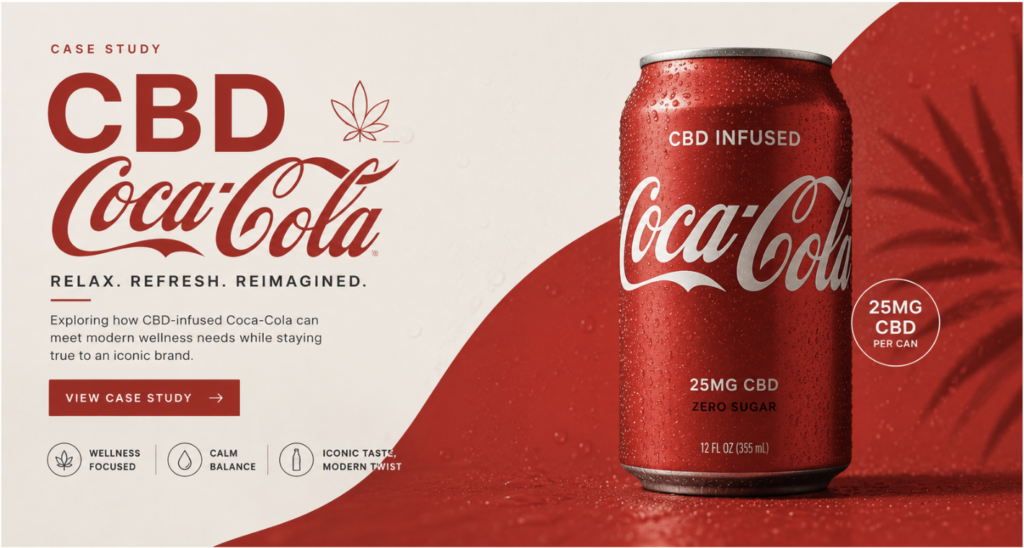
Created an integrated campaign introducing a fictional CBD Coca-Cola called Soft Reset, spanning paid, earned, shared, and owned media.
PAID
Creative Brief: Soft Reset Campaign
Brand: Coca-Cola
Product: CBD-infused Coca-Cola (Launch: Aug 8, 2026, National CBD Day)
Campaign Name: Soft Reset
Campaign Objective
CBD Coca-Cola’s Soft Reset campaign seeks to introduce a new role for Coca-Cola, not as an energy stimulant or party beverage, but as an emotional recovery ritual for Gen Z and Millennials navigating social fatigue, anxiety, and post-night overstimulation. The objective is to reposition Coca-Cola as the first legacy beverage brand to claim space in the wellness recovery market, bridging nostalgia with modern calm.
Target Audience
Young adults aged 18-34, primarily Gen Z and older Millennials who participate in nightlife, social events, and high-stimulation environments. This audience is culturally expressive yet internally anxious. They battle “emotional hangovers,” overthinking, and the need to decompress after intense social experiences. They order a hangover brunch, scroll in silence, and crave something comforting, familiar, and emotionally grounding.
Media Placement
The campaign will appear primarily in OOH formats like late-night urban billboards, bus shelters near nightlife districts, rideshare hubs, and digital screens in music venues and brunch corridors. Supplementary digital placements will run on TikTok, Instagram Reels, and Spotify audio ads where emotional content resonates.
Current vs. Desired Perception
Currently, Coca-Cola is perceived as a classic, high-sugar, high-energy soda associated with meals, parties, and nostalgia. We aim to evolve perception toward Coca-Cola as a wellness-adjacent beverage, a trusted companion during recovery, reflection, and reset. We want consumers to see Coke not just as a taste, but as a feeling.
Why We Need This Ad
Culture is shifting from hype to healing. Gen Z doesn’t just want to escape, they want to exhale. This ad is necessary to affirm Coca-Cola’s relevance in a generation prioritizing mental health, self-awareness, and emotional honesty. Soft Reset positions Coca-Cola at the forefront of a new ritual: the day-after drink.
Final Campaign Tagline / OOH Headline
“From Party to Peace.”
Print Media Placement
Full-page spread in V Magazine
Rationale: V Magazine bridges music, nightlife, and fashion culture. It’s a hub for trendsetters, club kids, and creative millennials. It reaches the exact audience who lives in high-energy spaces by night but craves introspection by morning. The tagline’s simplicity and contrast make it visually powerful in a fashion-editorial layout.
OOH Placement
- Digital billboards leaving major nightlife zones like Los Angeles (Sunset Boulevard), New York (Lower East Side), Miami (Wynwood)
- Bus shelters and rideshare pickup zones outside clubs, festivals, late-night diners
- Post-party hotspots near brunch strips and greasy delis (Katz’s, Canter’s, Prince Street Pizza)
Rationale: These placements capture the cultural shift, the moment adrenaline drops and self-reflection begins. By appearing after the party, Coca-Cola positions itself as part of the recovery ritual, not the chaos.
Strategy Note
“From Party to Peace” encapsulates the emotional arc of the Soft Reset campaign – a journey from overstimulation to inner calm. The tagline directly addresses Gen Z and Millennials who move between nightlife, self-expression, and the inevitable comedown. Rather than celebrating the high, it validates the aftermath, when anxiety, exhaustion, and silence replace noise. The phrasing is rhythmic and symmetrical, mirroring the duality of their lifestyle: public chaos, private healing. Strategically, it repositions Coca-Cola from a party staple to a post-party companion, aligning with the introduction of CBD as a cultural wellness tool. The word “Peace” is essential, as it shifts Coca-Cola’s promise from happiness to healing. By claiming this emotional territory, Coca-Cola enters a new market: emotional wellness beverages.
EARNED
“After the Noise: Why Brands Must Care About the Comedown, Not Just the Celebration”
By: Chief Innovation & Wellness Officer, The Coca-Cola Company
We’ve spent decades building brands for parties, games, concerts, and victory parades. But somewhere between the confetti and the Uber ride home, a truth emerged that our industry rarely names: people don’t always feel good after they have fun. The most universal human experience isn’t the party itself, it’s what happens when it’s over.
Today’s generation, especially Gen Z and younger Millennials, lives in contrast. They chase intensity yet wake up in anxiety. They post the night, then hide the morning. We’ve glamorized stimulation and ignored recovery. As a company responsible for some of the world’s most iconic rituals, we asked ourselves a hard question: What good is joy if we don’t acknowledge the comedown?
That question pushed us toward a new chapter – and yes, a bold one. This year, Coca-Cola will introduce a CBD-infused Coca-Cola designed not to fuel the party but to care for what follows. We call it the Soft Reset, for the mornings when coffee feels harsh, energy drinks feel impossible, and you need a gentler ritual, essentially, the exhale before you begin again.
CBD, to us, isn’t a novelty; it is a cultural acknowledgment. Stress, overstimulation, and emotional burnout have become normalized, yet seldom addressed by legacy brands. If our purpose is to refresh the world and make a difference, then refreshment must include permission to pause. We are not entering wellness to sell calm; we are entering it to validate calm and are doing so openly, responsibly, and with clear guardrails.
That responsibility matters. When a legacy company develops a product for emotional recovery, it must do so with governance worthy of trust: rigorous third-party testing, transparent labeling, age-appropriate placement, and marketing practices that respect vulnerable audiences. Wellness should make moderation easier – not invent new extremes. Our standard is simple: if we cannot do this responsibly, we will not do it.
Well-being no longer looks like perfection. Sometimes it looks like yesterday’s eyeliner, a deli sandwich, and the grace to start over. If Coca-Cola can be there not only when people toast, but when they recover – then we are evolving from a product that refreshes to a partner that understands.
The future of brand leadership won’t be measured in how high we take people, but in how gently we help them land. The world has enough noise. It’s time for more Soft Resets.
Strategy Note
This thought-leadership piece positions Coca-Cola as a cultural leader moving beyond celebration toward emotional responsibility. By acknowledging post-social anxiety and embracing CBD as a wellness tool, the message reframes the brand’s legacy from “Open Happiness” to Soft Reset: care, calm, and recovery. The op-ed strengthens credibility by using a future-facing executive voice, signaling that Coca-Cola is not chasing trends but addressing real human needs. This approach deepens trust with Gen Z and Millennials who demand authenticity, vulnerability, and purpose from modern brands.
SHARED
5 Reasons Why You Need Coca-Cola’s New Soft Reset in Your Life
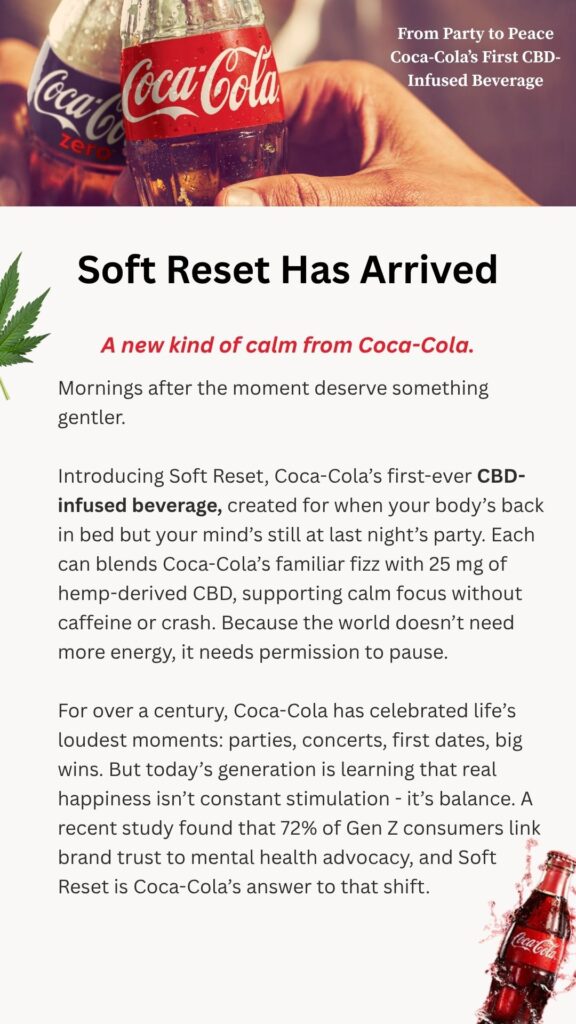
Drop everything! Coca-Cola just launched its first CBD-infused beverage, and it’s rewriting what refreshment means. Meet Soft Reset, the drink made for the morning after the moment when you’ve danced too long, laughed too hard, or simply lived at full volume.
It’s not another energy drink or sparkling soda; it’s a calm companion for a culture that finally admits it’s tired. Here’s why you’ll want Soft Reset stocked in your fridge ASAP.
1. It’s the First Coca-Cola Made to Help You Exhale
Soft Reset is Coca-Cola’s first-ever CBD-infused beverage, designed for recovery instead of rush. Each can contains 25 mg of hemp-derived CBD that supports relaxation without drowsiness – think clear calm, not crash.
2. It Tastes Like the Coke You Love, Just Softer
No weird aftertaste, no “wellness” flavor experiments. Soft Reset keeps that signature Coca-Cola balance of sweetness and fizz, only smoother and lighter, a flavor you can sip before brunch or during your next deep-breath moment.
3. It’s a Ritual for Real Life, Not a Trend
Between deadlines, dating apps, and endless scrolls, stress is universal. Soft Reset transforms the world’s most iconic soda into a mindful ritual, one that says, you don’t have to be “on” all the time.
4. It Looks as Calm as It Feels
The can is minimalist matte red fading into white, like sunrise after a late night. It’s aesthetic, portable, and made for your bedside, gym bag, or Sunday-morning Uber ride home.
5. It’s Coca-Cola’s Step Toward Wellness with Integrity
This launch isn’t about chasing a fad. It’s Coca-Cola acknowledging that wellness belongs to everyone. Transparent sourcing, responsible CBD formulation, and a commitment to mindful marketing make Soft Reset both ethical and elevated.
Final Thoughts
From party to peace, Soft Reset proves that even the world’s most celebrated beverage can evolve with the times. It’s not just refreshment, it’s recovery, redefined.
#SoftReset #FromPartyToPeace #CocaColaCBD #NationalCBDDay
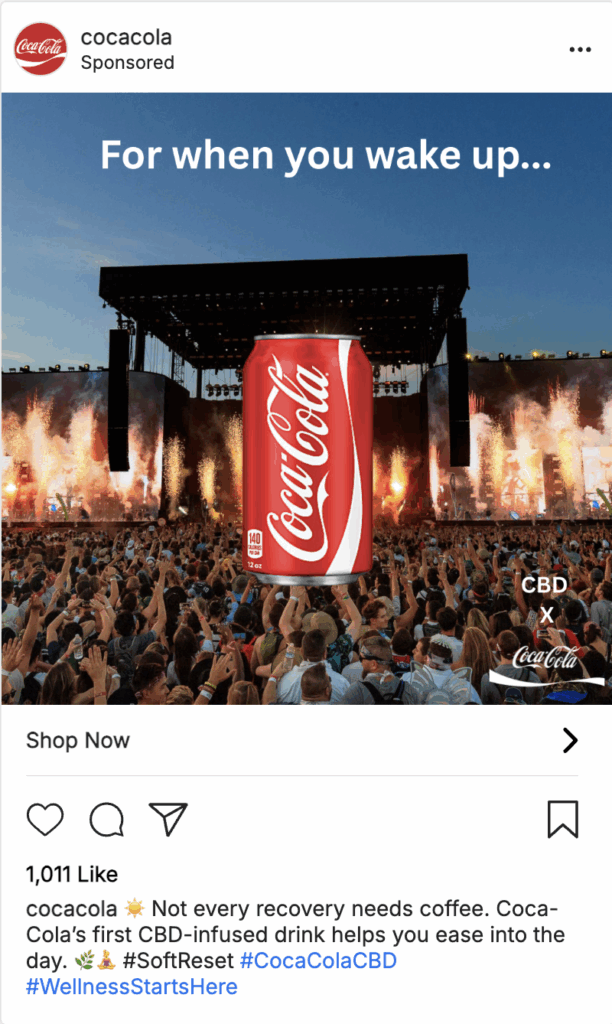
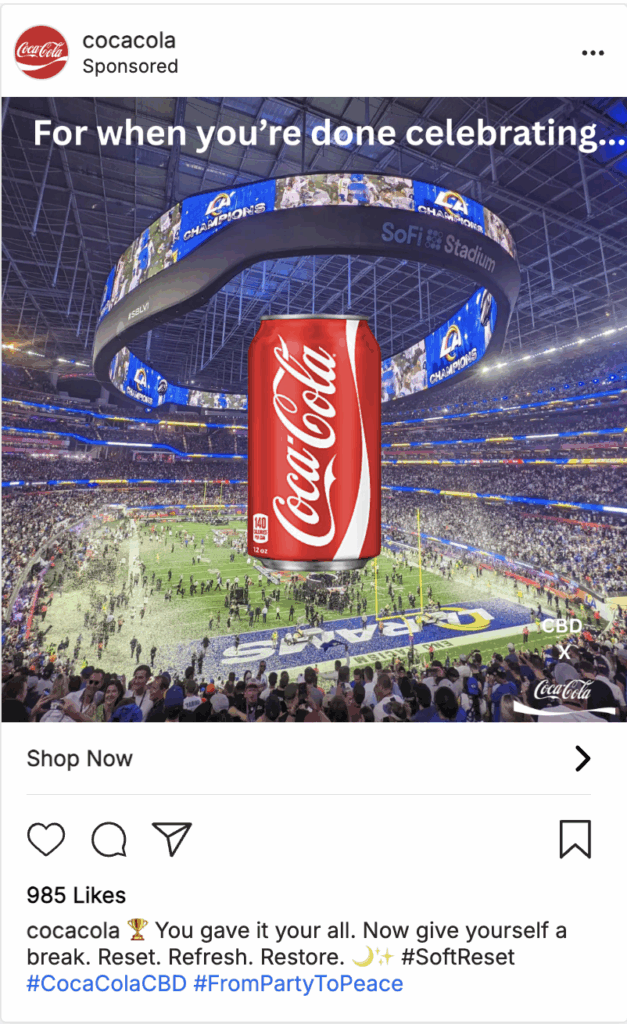
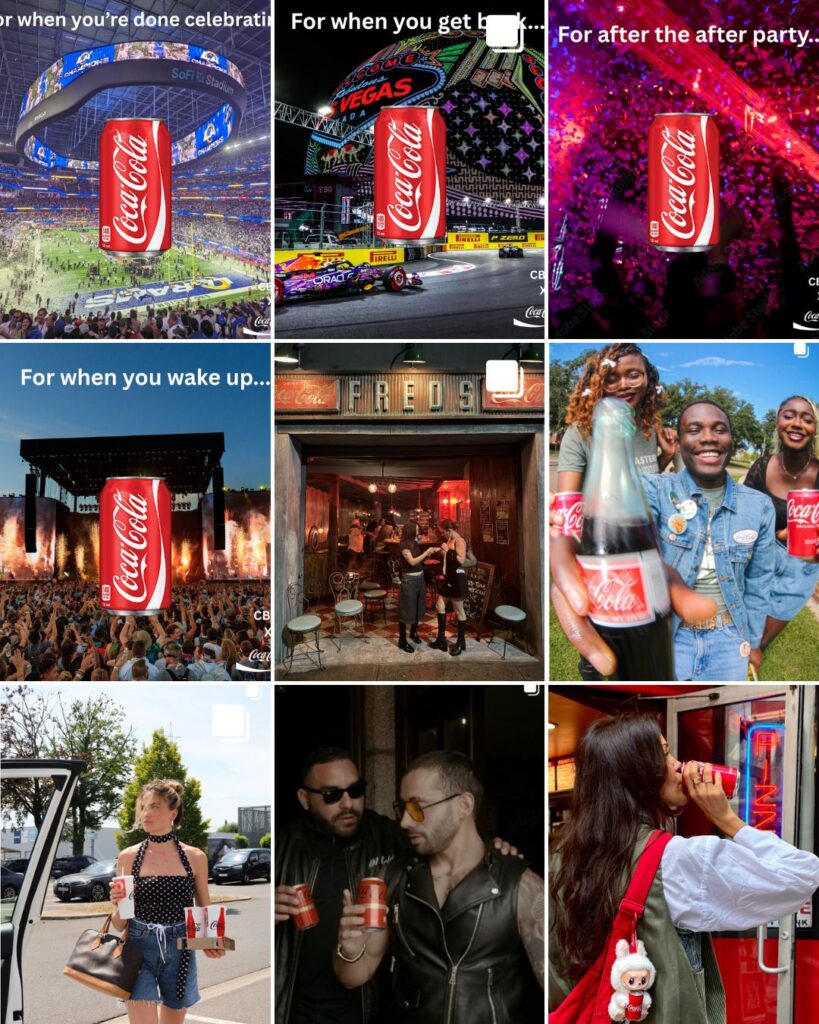
Instagram Posts
Instagram Grid View
Newsletter
OWNED
SWOT ANALYSIS
Strengths
• Brand Recognition and Trust: Coca-Cola is one of the world’s most recognizable brands, operating in more than 200 countries with deep generational loyalty (The Coca-Cola Company, 2024). This scale and heritage give it the credibility to normalize CBD beverages and bring wellness-oriented innovation into the mainstream. Consumers who might be hesitant to try CBD products are far more likely to trust one backed by Coca-Cola’s reputation for safety and quality.
• Innovation Capacity: Coca-Cola has repeatedly expanded beyond traditional sodas through acquisitions and product diversification (Forbes, 2023). Its R&D strength, advanced bottling systems, and marketing infrastructure enable the company to experiment with emerging wellness trends like CBD while maintaining consistency in taste and branding.
• Financial Resources: With $43 billion in annual revenue (Statista, 2024), Coca-Cola can afford the regulatory costs, research investment, and phased rollout required to introduce CBD-infused beverages responsibly. This financial stability also allows for strong educational marketing campaigns that smaller wellness startups can’t match.
• Emotional Brand Equity: Coca-Cola’s association with happiness, comfort, and human connection positions it perfectly to enter the wellness space with authenticity. The brand’s emotional resonance helps reframe Soft Reset not as a radical departure, but as a natural evolution, from joy through stimulation to joy through calm.
Weaknesses
• Regulatory Ambiguity: CBD remains under complex FDA regulation for use in foods and beverages (U.S. FDA, 2024). This uncertainty limits advertising freedom, interstate distribution, and consistency in labeling, potentially delaying a full national launch or adding compliance costs.
• Brand Perception Conflict: Coca-Cola’s traditional “family-friendly” image could clash with CBD’s cannabis-related associations (Mintel, 2024). This tension requires careful messaging to ensure that Soft Reset is viewed as a wellness product, not a lifestyle risk, particularly among older or conservative demographics.
• High Production and Compliance Costs: Hemp-derived ingredient sourcing, third-party lab testing, and strict supply chain verification make CBD beverages more expensive to produce (Euromonitor, 2024). These costs could impact pricing strategy, potentially limiting accessibility and trial among younger consumers.
• Market Saturation: The functional beverage space is increasingly crowded, with brands like Recess, Vybes, and PepsiCo’s Driftwell already competing for the same “relaxation drink” market share. Coca-Cola must clearly articulate why its product is different, not just another entrant, but a trusted and credible leader.
Opportunities
• Functional Beverage Growth: The global CBD beverage market is projected to exceed $6 billion by 2030 (Grand View Research, 2024). Coca-Cola can use this early-stage market to establish a leadership position, offering a scaled, trustworthy alternative to niche competitors while driving normalization of CBD in mainstream consumer culture.
• Gen Z and Millennial Alignment; A majority of Gen Z consumers (72%) report that brand alignment with mental health and well-being influences purchase behavior (Deloitte, 2023). Soft Reset directly speaks to this audience’s lived reality, burnout, anxiety, overstimulation, positioning Coca-Cola as empathetic and emotionally intelligent.
• Sustainability Synergy: Coca-Cola’s goal of achieving 100% recyclable packaging by 2030 (The Coca-Cola Company, 2024) allows Soft Reset to align environmental wellness with emotional wellness. This synergy strengthens the brand’s ESG credibility while reinforcing the campaign’s calming, mindful identity.
• Strategic Partnerships: Collaborations with wellness influencers, therapists, or mental-health nonprofits would add credibility and authenticity to Soft Reset’s positioning. These partnerships could also help frame CBD as an ingredient for emotional care, not indulgence, shifting perception from taboo to trusted.
Threats
• Regulatory Changes: Rapidly shifting state and federal CBD laws could delay rollout or necessitate reformulation (U.S. FDA, 2024). Without a unified regulatory framework, Coca-Cola must adopt a cautious, phased entry strategy to avoid costly recalls or brand confusion.
• Consumer Misunderstanding of CBD: Despite growing awareness, many consumers still confuse CBD with THC, associating it with intoxication or illegality (Pew Research Center, 2024). This misconception could slow early adoption, underscoring the importance of education-first messaging in Soft Reset’s communications.
• Competitive Pressure: Wellness startups already occupy a strong foothold in this niche, and their “indie authenticity” may appeal to early adopters more than a legacy corporation’s entry. Coca-Cola will need to rely on quality, transparency, and emotional storytelling to differentiate from smaller players with cult followings.
• Economic Sensitivity: As inflation affects consumer spending, premium-priced wellness beverages may see reduced trial or repeat purchase (Bloomberg Intelligence, 2024). Coca-Cola must balance price accessibility with premium perception to maintain relevance across income segments.
STRATEGIC INSIGHTS
Strategic Initiative 1: Own the Calm Category
Rationale:
Building on Coca-Cola’s strengths in global brand trust and emotional connection, this initiative capitalizes on the opportunity in the $6 billion functional beverage market (Grand View Research, 2024). Coca-Cola Soft Reset positions the company as a credible leader in emotional wellness, transforming its traditional association with energy and celebration into one of balance and recovery. This reframing differentiates Coca-Cola from competitors who lack equivalent brand equity or emotional storytelling power.
SWOT Alignment: Strengths (Brand Trust, Emotional Equity); Opportunities (Functional Beverage Market Growth).
Success Metrics: Achieve 10% market share in the functional beverage category by 2028; 80% positive brand sentiment around wellness positioning within 12 months.
Strategic Initiative 2: Educate Before You Advertise
Rationale:
Addressing weaknesses in regulatory ambiguity and threats from consumer misunderstanding of CBD, this initiative positions Coca-Cola as a transparent educator rather than just a marketer. Through clear product labeling, FAQ-based digital content, and partnerships with medical and wellness experts, Coca-Cola can demystify CBD and build consumer confidence. This strategy reduces perceived risk while aligning with the company’s longstanding reputation for integrity and safety.
SWOT Alignment: Weaknesses (Regulatory Ambiguity, Brand Perception Conflict); Threats (Consumer Misunderstanding).
Success Metrics: 30% increase in accurate consumer understanding of CBD (survey-based); measurable 25% increase in trust-related keywords across social sentiment analysis.
Strategic Initiative 3: Sustainability = Serenity
Rationale:
Leveraging Coca-Cola’s opportunity in ESG leadership and addressing the threat of consumer skepticism, this initiative aligns environmental calm with emotional calm. By using recyclable packaging and promoting its 100% recyclability goal by 2030, Soft Reset connects mental wellness with responsible consumption. This positions Coca-Cola as a brand that not only refreshes individuals but also restores the planet.
SWOT Alignment: Opportunities (Sustainability Synergy); Threats (Competitive Differentiation).
Success Metrics: 25% rise in engagement on sustainability-related content; improved ESG favorability score in annual brand perception tracking.
Strategic Initiative 4: Mindful Market Rollout
Rationale:
To mitigate threats from regulatory uncertainty and economic volatility, Coca-Cola should adopt a phased rollout of Soft Reset beginning in fully legalized CBD markets (e.g., California, Colorado). This allows data-driven testing of consumer response, pricing, and messaging before a national launch. The approach ensures responsible entry, limits financial exposure, and aligns with the company’s strength in operational scale and market adaptability.
SWOT Alignment: Threats (Regulatory Changes, Economic Sensitivity); Strengths (Financial Resources).
Success Metrics: Launch pilot in three U.S. states by 2026 with 90% customer satisfaction in post-launch surveys; 15% reduction in operational risk as measured by compliance audit outcomes.
Strategic Initiative 5: Redefine Refreshment Through Wellness
Rationale:
Drawing from the strength of Coca-Cola’s emotional storytelling and the opportunity to lead Gen Z wellness culture, this initiative evolves the brand’s central narrative from celebration to recovery. By positioning Soft Reset as “the drink for after the after-party,” Coca-Cola reclaims the idea of refreshment as restoration, not excess. This language modernization allows the company to stay culturally relevant while deepening its emotional resonance with younger consumers.
SWOT Alignment: Strengths (Emotional Brand Equity); Opportunities (Gen Z and Millennial Alignment).
Success Metrics: 15% growth in Gen Z purchase intent; 20% increase in engagement across wellness-themed social campaigns; consistent 4.5+ average sentiment rating in brand tracking studies.
PROJECT CITATIONS
Allied Market Research. (2023). Functional beverages market size and forecast 2023–2030. https://www.alliedmarketresearch.com/
Bloomberg Intelligence. (2024). Consumer discretionary outlook: Premium beverages and inflation. https://www.bloomberg.com/professional/product/intelligence/
Canva (used to create Newsletter, Instagram Posts & Grid View)
Deloitte. (2023). Gen Z and Millennial consumer insights report. https://www.deloitte.com/
Euromonitor International. (2024). CBD-infused beverages: Global trends and regulatory review. https://www.euromonitor.com/
Forbes. (2023, December). Coca-Cola’s portfolio diversification and acquisitions. https://www.forbes.com/
Grand View Research. (2024). CBD beverages market size, share & trends report, 2024–2030. https://www.grandviewresearch.com/
Mintel. (2024). U.S. consumer perceptions of cannabis-related products. https://www.mintel.com/
OpenAI. (2025). ChatGPT (GPT-5) [Large language model]. https://chat.openai.com/
(used for research + punctuation/grammar/spelling throughout)
Pew Research Center. (2024). Public understanding of CBD and cannabis derivatives. https://www.pewresearch.org/
Statista. (2024). Coca-Cola Company global revenue 2010–2024. https://www.statista.com/
The Coca-Cola Company. (2024). 2023 Business & Sustainability Report. https://www.coca-colacompany.com/
U.S. Food and Drug Administration. (2024). Cannabidiol (CBD) regulation update. https://www.fda.gov/